
Smart Glass Guide: EC vs SPD vs PDLC Technology Compared
Industry Insights · 2026/10/21 · 13 views
Compare electrochromic (EC), SPD, and PDLC switchable smart glass for architectural projects. Power draw, switching speeds, haze levels, and cost benchmarks.
Short answer: Smart glass technology covers three switchable glazing families, and they are not interchangeable. Electrochromic (EC) glass varies visible light transmittance from 5% to 60% and holds its tint without power; SPD glass dims instantly; PDLC privacy glass goes from clear to frosted in milliseconds but insulates poorly. Commercial facades pair EC with solar control and PDLC with privacy.
Key takeaways
- Electrochromic glazing is bistable: it needs 3–5V only while changing state, not while holding a tint.
- PDLC film is a privacy device, not an energy device, because its thermal performance trails electrochromic glass.
- Specify switchable glazing by whole-window U-factor, SHGC and VT together, never by glass-only figures.
- Ask for the test standard behind each number; EC, SPD and PDLC are rarely tested on the same basis.
- Driver count, control scope and electronics warranty drive lifecycle cost more than glass price per square metre.
What Smart Glass Technology Changes on a Commercial Facade
A conventional facade manages heat and glare with fixed coatings, blinds or external louvres. Switchable glazing moves that control into the glass itself: visible light transmittance (VT) and solar heat gain coefficient (SHGC) change on demand, so a west elevation can be clear in the morning and tinted by late afternoon with no moving parts. For a facade contractor the change is mostly scope. Switchable units add low-voltage wiring, driver cabinets, a control interface and commissioning to packages the facade team is already coordinating.
The figures that decide a tender are whole-window values, not glass-only values. NFRC rates U-factor, SHGC, VT and air leakage on the complete assembly, and a switchable unit only performs to that label when the frame, spacer and gasket are rated with it. Switchable glass is therefore specified alongside commercial storefront systems as one rated assembly, not as a glass line item bolted onto an unrelated frame.
How Electrochromic Glass Switches and Where It Fits
Electrochromic glass carries a tungsten oxide stack laminated into the insulating glass unit. A 3–5V direct-current pulse drives ions into the electrochromic layer and tints it; reversing the polarity clears it. The reaction is bistable, so the coating holds its tint once the voltage is removed and standby draw falls away.
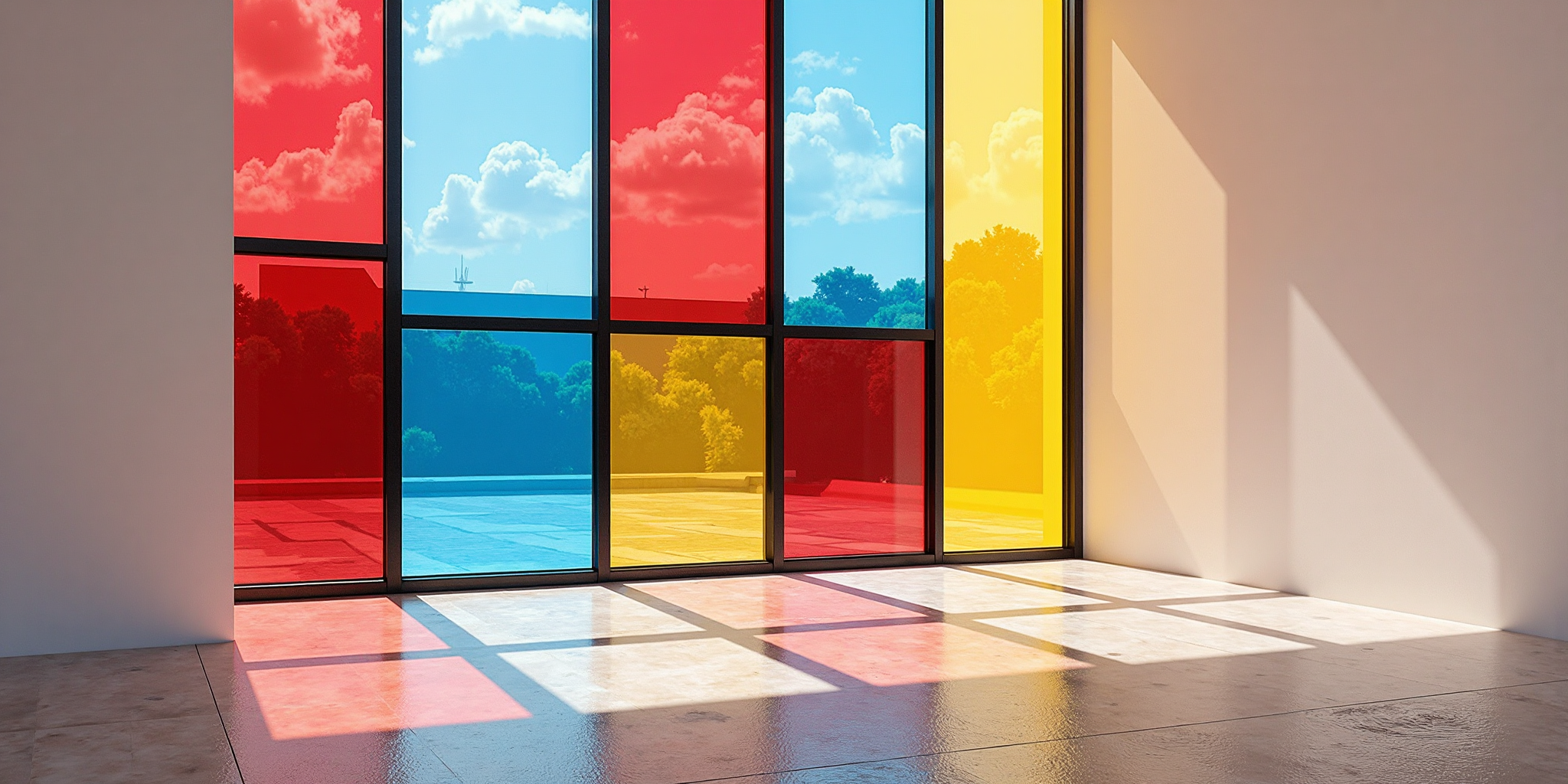
Tunability is continuous across 5–60% visible light transmittance, so a tint level can be dialled to a target rather than chosen from discrete shades. Response times have shortened from several minutes on early products to under 3 seconds, which is adequate for glare control and far too slow for privacy.
Best fit is west and south elevations carrying a high cooling load, plus atria and rooflights where external shading cannot be fixed to the structure; solarium and skylight glazing is a common entry point. The counter-case matters as much: EC is the wrong product for a room that must become opaque in seconds, and at any tint level it is not a privacy device.
SPD Glass, PDLC Privacy Glass and the Limits of Each
SPD glass uses a suspended-particle film between two conductive layers. An alternating voltage aligns the particles and the unit clears; when the supply stops, the particles scatter and the glass darkens. Dimming is continuous, but the film needs a continuous supply to stay clear, so SPD draws power whenever transparency is wanted — unlike bistable electrochromic glass.
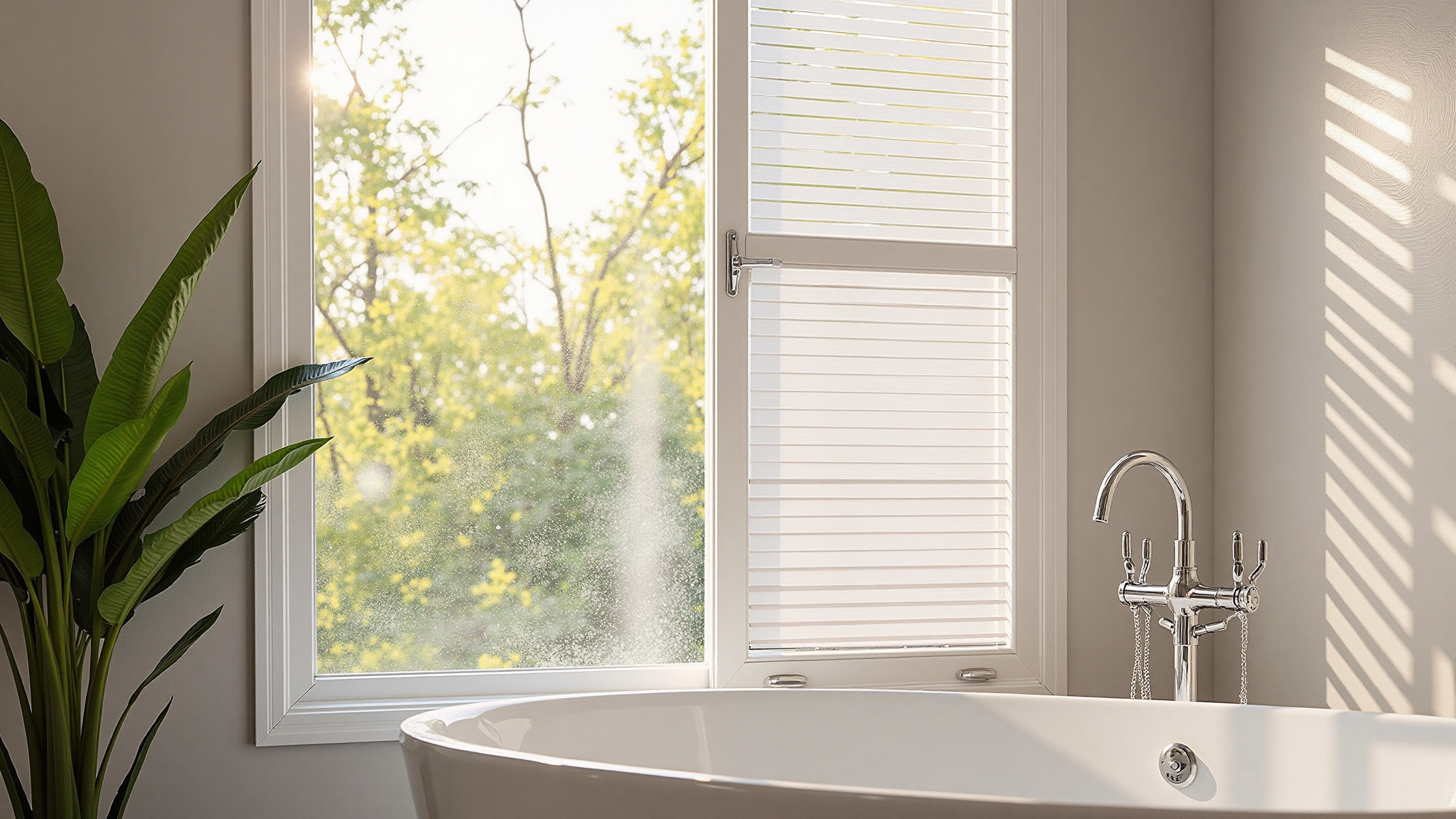
PDLC privacy glass works from the opposite default. Polymer-dispersed liquid crystals scatter light in the unpowered state, giving a frosted pane, and align to clear when energised. Switching takes milliseconds, which is why PDLC is specified for conference rooms, clinical spaces and consultation areas where the change must feel immediate.
The limitation is optical. The frosted state scatters rather than blocks, so a lit room reads as a soft silhouette at night. Specify PDLC where privacy means visual separation, not where a room must be dark or fully concealed, and treat it as a privacy layer rather than a thermal one.
EC vs SPD vs PDLC: Comparison Table
The table compares the three families on the six variables that usually decide a specification. Where a family has no published numeric range, the cell describes behaviour rather than inventing a figure; the cost column is relative, not a price.
| Switching state | Typical visible light transmittance | Switching speed | Power draw | Best-fit application | Relative cost |
|---|---|---|---|---|---|
| Clear to tinted, continuously variable, bistable | 5–60% VT | Under 3 seconds | 3–5V, while switching only | West and south facades, atria | Highest |
| Clear to dark, continuously variable, not bistable | Adjustable; dark level set by film supplier | Faster than EC, slower than PDLC | Continuous supply while clear | Instant glare control | Mid |
| Clear when powered, frosted when unpowered | Near float glass clear; frosted scatters | Milliseconds | Supply held while clear | Meeting and clinical rooms | Lowest |
Two caveats apply. A glass-only switching range does not transfer to the window: frame and spacer set the U-value, while the switchable layer mainly moves SHGC and VT. These families are seldom tested on identical protocols, so request the standard behind each figure.
Smart Glass Specification: What to Put in the Tender Package
A switchable glazing package is specified in documents, not in a catalogue photograph. These items generate claims after handover when omitted.
- Whole-window U-factor, SHGC and VT on an NFRC label, or EN 14351-1 for European projects.
- VT in both states, with the tint range stated as measured, not nominal.
- Switching time at the coldest and hottest project temperatures, not only at 20 °C.
- Driver location, cabinet ventilation, spare capacity, and an electronics warranty separate from the glass warranty.
- Control protocol, point list, and who commissions the building management interface.
- Laminated build-up and safety classification to AS 1288, plus an approved sample before production.
Each line should name a test standard and the responsible party. OPPGATE certifications cover frames and assemblies, so they belong in the switchable specification, not on a glass purchase order alone. The Efficient Windows Collaborative tool cross-checks SHGC and VT trade-offs at concept stage, and a rated frame such as the Premium Casement Window Series keeps the assembly stable while glass is compared.
Cost, Maintenance and When Switchable Glazing Is the Wrong Choice
Capital cost is driven by film area, driver count, low-voltage distribution and commissioning hours, not by glass alone. The operating side is modest: EC draws power only while changing state, while SPD and PDLC hold a supply as long as the pane stays clear. That difference shows up over a decade of switching cycles, not in a first quote.
The counter-case matters in any buyer's comparison. Where a fixed Low-E coating on a thermal break aluminium frame already meets the target whole-window U-value and SHGC, switchable glazing adds capital cost and electronics without moving those figures much. It earns its place where glare and cooling peaks collide, not as insulation.
Building-level data supports that framing. IEA buildings analysis treats envelope performance as a first-order lever on demand, and LEED credits follow the modelled whole-building result, so the simulation decides the outcome, not the technology label. Specify model, baseline and control schedule together.
Frequently asked questions
Is smart glass technology the same as PDLC privacy film?
No. PDLC film is chosen for privacy first, because its frosted state scatters light and its thermal performance still trails electrochromic glass. Smart glass technology also covers electrochromic and SPD products, specified for solar control and glare rather than room privacy.
What U-value can switchable glazing achieve?
The U-value comes from the frame, spacer and cavity, not from the switchable layer. OPPGATE publishes 0.8–1.6 W/m²K across its window range with thermal break frames and multi-chamber profiles; a switchable coating mainly changes SHGC and visible light transmittance on top of that figure.
How much power does electrochromic glass use?
Electrochromic glass runs at 3–5V and draws current only while changing state, because the coating is bistable and holds its tint once the pulse ends. Daily consumption depends on how often the facade is switched, not how long the glass stays tinted.
Can PDLC glass be used on an exterior facade?
It can be laminated into an exterior unit, but it is rarely the right choice there. PDLC switching takes milliseconds and suits privacy, while its thermal performance trails electrochromic glass and it does not modulate solar heat gain usefully at facade scale.
Which of the three costs the most per square metre?
Relative cost ranks electrochromic glass highest, SPD between, and PDLC lowest. Absolute cost depends on unit size, driver count, control scope and the frame it is married to, so glass price per square metre is not a project price for the opening.
How long does a switchable glazing order take?
OPPGATE issues a technical quotation within 24–48 hours of a window schedule, CAD DWG or PDF elevation, and ships 20–30 calendar days after drawing approval. Custom extrusion or RAL colour matching extends the full production schedule to roughly 35 days.
Next step: send a window schedule, CAD DWG or PDF elevation to karen@oppgates.com, or request a technical quotation. OPPGATE replies with pricing and a glazing build-up within 24–48 hours; lead time is 20–30 days after drawing approval.