
Window Hardware Load Ratings: 100,000-Cycle Testing
Technical Guides · 2026/10/28 · 19 views
Window hardware load ratings explained: sash mass limits, EN 13126 classes and 100,000-cycle fatigue testing before a hardware schedule is approved
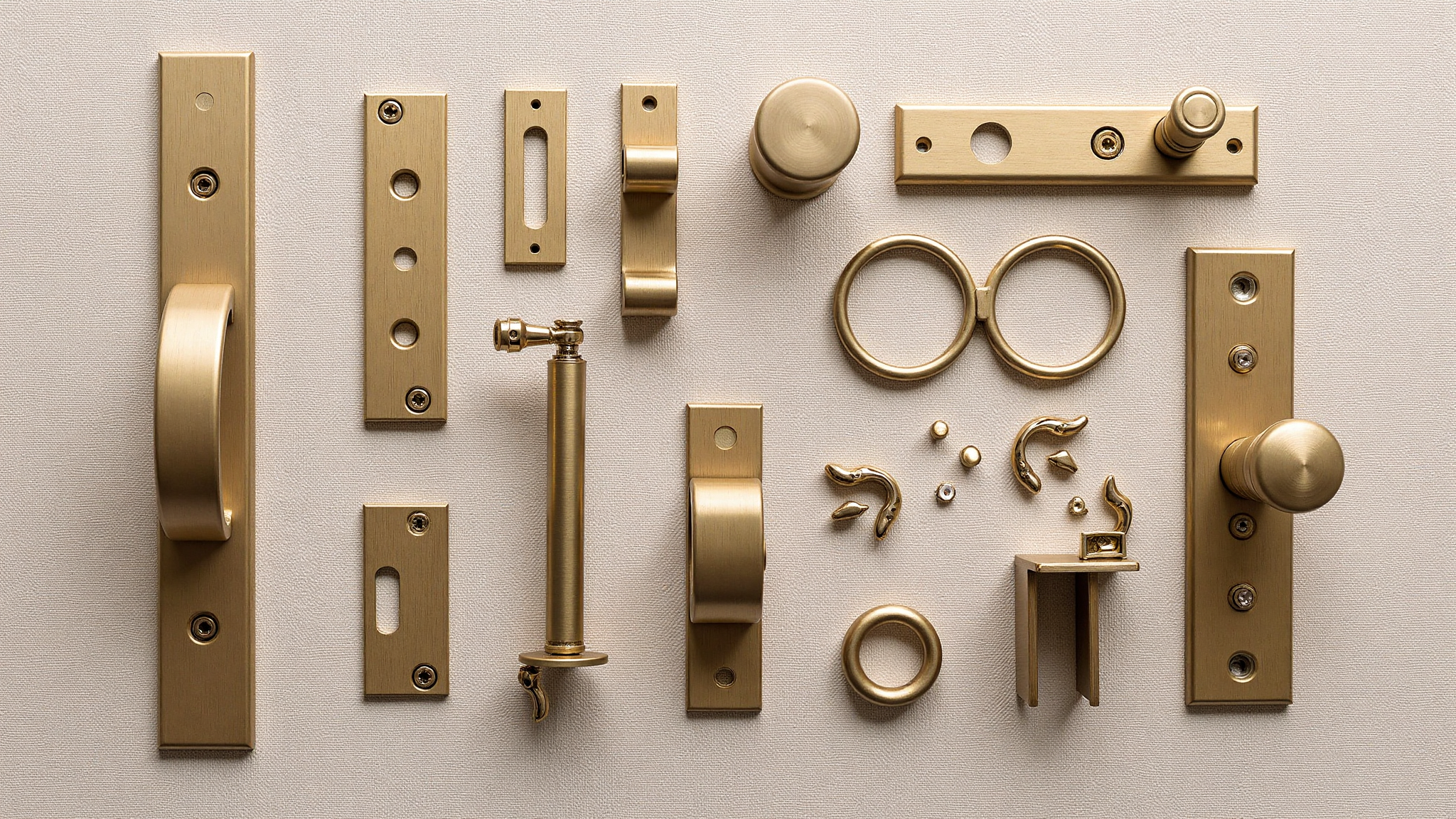
Short answer: A window hardware load rating states how much sash mass, wind pressure and operating torque a hardware set can carry across a defined number of cycles. Ratings are comparable only when the cycle count, test standard and sash mass limit are quoted together. OPPGATE publishes 100,000 cycles for its aluminium window hardware, tested on the complete gearing and multi-point locking assembly.
Key takeaways
- A load rating fixes three variables at once: sash mass, design wind pressure and the cycle count the assembly must survive.
- Corner gearing and friction stays reach their limit before hinges do, because they transmit load through a longer lever arm.
- One hundred thousand cycles on a window opened twice a day represents far more operating life than most buildings deliver.
- Screw pull-out from thin-walled or foam-filled profiles is a more common field failure than fracture of the hardware itself.
- The hardware class belongs in the window schedule and must be verified on the delivered unit, not assumed from a drawing.
What a window hardware load rating actually certifies
A hardware load rating is not a strength figure in the way a steel grade is. It is a test certificate that fixes four variables: the mass of the sash carried, the pressure applied to it, the number of cycles completed, and the condition of the assembly afterwards. Change any one and the rating no longer describes the product.
Suppliers who quote "heavy duty" or "100,000 cycles" without a sash mass answer only part of the question. A gearbox that survives 100,000 cycles on a 25 kg casement can fail far earlier on a 60 kg tilt-turn sash, because the corner drive transmits handle torque through a longer lever. Both numbers belong in the same sentence.
Post-test condition is where European and North American practice differ. The EN 13126 series grades hardware by durability class and requires the assembly to remain operable after cycling. North American practice adds a residual torque limit. A certificate reporting survival without residual function is weak evidence, because a window that opens but no longer compresses its gasket has already failed acoustically and in watertightness.
Sash mass, lever arm and the loads hardware really sees
Hardware carries three loads that peak at different moments. Self-weight is constant and vertical, carried by hinges, stays or carriages. Wind pressure is cyclical and reverses, so locking points see tension on a gust and compression as pressure drops. Operating load arrives by hand and is multiplied through the gearing.
Wind load on the sash is governed by design pressure and glazed area, not by frame size. A unit tested to ASTM E330 design pressure carries that pressure across the full glazed area, so a tall sash high on an elevation loads its hardware far more than a wider sash of identical area at podium level.

Figure 1: Design pressure rises with height, so upper-floor hardware carries more wind load than the same unit at podium level.
Moment matters more than mass. A stayed sash resists its weight through the horizontal distance between hinge line and centre of mass, so stay load equals mass times that distance. A taller sash moves the centre outward and raises the load even when mass is unchanged. This is how a schedule value-engineered from a 1.2 m casement to a 2.1 m casement with unchanged hardware ends with stays dropping in year one.

Figure 2: Glazed mass, not frame size, is the number hardware must be rated against.
Hardware families compared by what sets their limit
Five families cover most architectural aluminium windows and doors, and each fails differently. Their limit is set by geometry and fixing anchorage, not by the tensile strength of the metal.
| Hardware family | Load-bearing material | Typical limit set by | Standard basis | Best-suited application |
|---|---|---|---|---|
| Friction stay, casement | Stainless stay arm with polymer friction pad | Stay length, pad area and screw anchorage into the profile wall | EN 13126 series | Casements and awnings up to medium sash mass |
| Butt hinge with multi-point lock | Extruded aluminium or steel leaf, stainless fixings | Leaf thickness, screw pull-out resistance and leaf mass | EN 1935, AAMA 902 | Entrance and high-traffic commercial doors |
| Tilt-turn corner gearing | Zinc die-cast corner drive with steel espagnolette | Drive geometry and espagnolette stiffness over long sashes | EN 13126 series | Tall tilt-turn and ventilation sashes |
| Lift-and-slide carriage | Stainless roller assembly on aluminium or steel track | Roller diameter, axle load and track flatness | EN 13126 series, manufacturer data | Wide patio doors with heavy glazing |
| Concealed pivot set | Stainless pivot pin with floor or head bearing | Pivot pin diameter and rigidity of the floor fixing | EN 1935 | Frameless panels and lobby pivot doors |
The weakest link is usually the connection between hardware and profile rather than the hardware body: a stainless stay fixed into a 1.4 mm profile wall with short screws pulls out long before the stay arm bends. The cited standards are type tests on a hardware family, not approvals of a finished window, so specify a window-level performance class too.
How a 100,000-cycle fatigue test is actually run
Fatigue testing exists because hardware almost never fails on first operation. It fails after thousands of small movements wear a polymer pad, enlarge a screw hole or polish a cam. A cycle test compresses that wear into weeks by repeating the full sequence under load to the declared count or to failure.
What one cycle means
One cycle is a complete operating sequence, not a handle movement: the sash is unlatched, opened to its designed position, held, closed and relatched with locking points engaged. On a tilt-turn unit that includes both turn and tilt, because the corner drive works in two planes and wears differently in each. A stated 100,000 therefore means 100,000 complete open-and-latch actions.
Conditions that change the result
Three conditions move the number materially. Corrosion pre-conditioning by salt spray before cycling degrades lubricant and exposes bi-metallic contact between stainless fixings and aluminium, so hardware that passes dry can seize after exposure. Cycling with the rated sash mass attached is a different test from cycling bare hardware, and a rig running faster than service duty can overheat polymer pads.
Acceptance is judged on residual function, not on the absence of breakage. The assembly must still latch at every locking point, handle force must stay inside the declared band, and there must be no cracking at the corner drive or ovalised fixing holes. Buyers should check the sash mass used, the pre-conditioning and the pass criteria, not only the headline number.
Specifying hardware in the schedule and verifying it at delivery
The window schedule is where hardware performance is locked in or lost. A usable line item names the hardware family, the sash mass it is rated for, the standard and cycle class, the finish, and the warranty term. Where sash size changes during design development the line must be re-issued, because a rating is valid only for the mass it was tested at.

Figure 3: Hardware is released against the sash mass on the drawing, so schedule revisions must reach the supplier.
Shop drawing review is the second control point. The reviewer should see, on one sheet, the sash mass calculation, the hardware reference with its rated limit, and the number and position of locking points. A drawing that lists hardware generically cannot be verified once the units are fabricated.
Delivery verification is physical and quick. Confirm the reference stamped on the espagnolette and corner drive matches the approved schedule, check that every listed locking point is present and closes, inspect gasket compression at the closing edge, and operate one unit of each type through ten full cycles while watching for rising handle force or sash drop.
Where a 100,000-cycle rating is the wrong requirement
Cycle ratings are meaningful only where a sash moves. Fixed windows, shopfront infill and structural glazing carry no operating cycles, so their hardware scope is limited to pressure plates, brackets and drainage parts. What governs there is structural capacity under design pressure and corrosion resistance; a cycle certificate adds cost without service life.
The logic reverses for openings that move far more often. Automated louvres, motorised roof vents and retail frontage doors can complete dozens of cycles a day, turning a 100,000-cycle set into a five-year consumable. Those belong on drive-unit ratings and a planned replacement interval.
Figure 4: Manual casements in residential and commercial use sit well inside a 100,000-cycle allowance.
A third case is often mis-specified: refurbishment where the existing frame is retained and only the sash replaced. A modern heavy sash on original hinge positions changes the lever arm at the fixing, and the correct answer is usually a redesigned hinge plate rather than a higher-rated hinge.
Frequently asked questions
How do I calculate the sash mass a hardware set must carry?
Add glass mass, frame and sash extrusion mass, and the hardware itself. Glass dominates: multiply glazed area by thickness by 2.5 kg per square metre per millimetre for float glass, and more for laminated interlayers. Compare the total with the rated limit for that family at those dimensions.
Is a 100,000-cycle rating the same as a ten-year warranty?
No. The cycle count describes endurance under a test protocol; a warranty describes commercial terms for a defined application and maintenance regime. A window opened four times a day accumulates roughly 1,500 cycles a year, so 100,000 cycles represents decades of manual use, while a motorised unit at forty cycles a day consumes the same allowance in under seven years.
Which standard should I cite in a hardware specification?
For European and most export projects, cite the EN 13126 series for window hardware and EN 1935 for single-axis hinges, with the durability class stated. For North American work, cite AAMA 902 for side-hinged door hardware and AAMA 910 where a life-cycle test applies. Cite the family standard and the class.
Can standard hardware be used on a three-metre lift-and-slide door?
Rarely. A three-metre opening with triple glazing can exceed the mass band of a standard carriage, and the limit is normally the roller and track rather than the gearing. Specify a carriage rated for the calculated panel mass, confirm the track is level across the travel, and require the supplier to state the panel mass used in testing.
Why does hardware fail early on coastal projects?
Chloride attacks interfaces rather than visible surfaces. Stainless fixings in direct contact with aluminium form a galvanic couple in salt and moisture, and the aluminium around the screw erodes, loosening the fixing. Lubricant degrades faster too, raising handle force. Grade 316 fixings, isolation washers and a lubrication interval address most of the risk.
Do I need to re-test hardware when the glass make-up changes?
Yes, whenever the change alters sash mass or the centre of mass. Upgrading from double to triple glazing on the same profile adds mass and moves the centre outward, increasing both the vertical load on the stay and the moment about the hinge line. The hardware may still be adequate, but show that by calculation against the rated limit.
To convert a hardware specification into a verified scope, send the window schedule, elevation drawings in CAD DWG or PDF, and the glazing make-up for each unit to karen@oppgates.com. OPPGATE returns a technical quotation within 24 to 48 hours stating hardware family, rated sash mass and cycle class per line item, with production lead time of 20 to 30 days after drawing approval. The thermal break tilt and turn window shows this gearing in a complete system, the commercial storefront range covers high-traffic door hardware, and the buyer's specification guide sets out the remaining schedule inputs. Window-level test evidence is listed in the certification portfolio.
Keep three references open during design: CEN-CENELEC for the EN 13126 series and EN 1935, Standards Australia for AS 2047 wind pressure classes, and ASTM International for the E330 structural test that fixes design pressure.